Four Hours in New Orleans
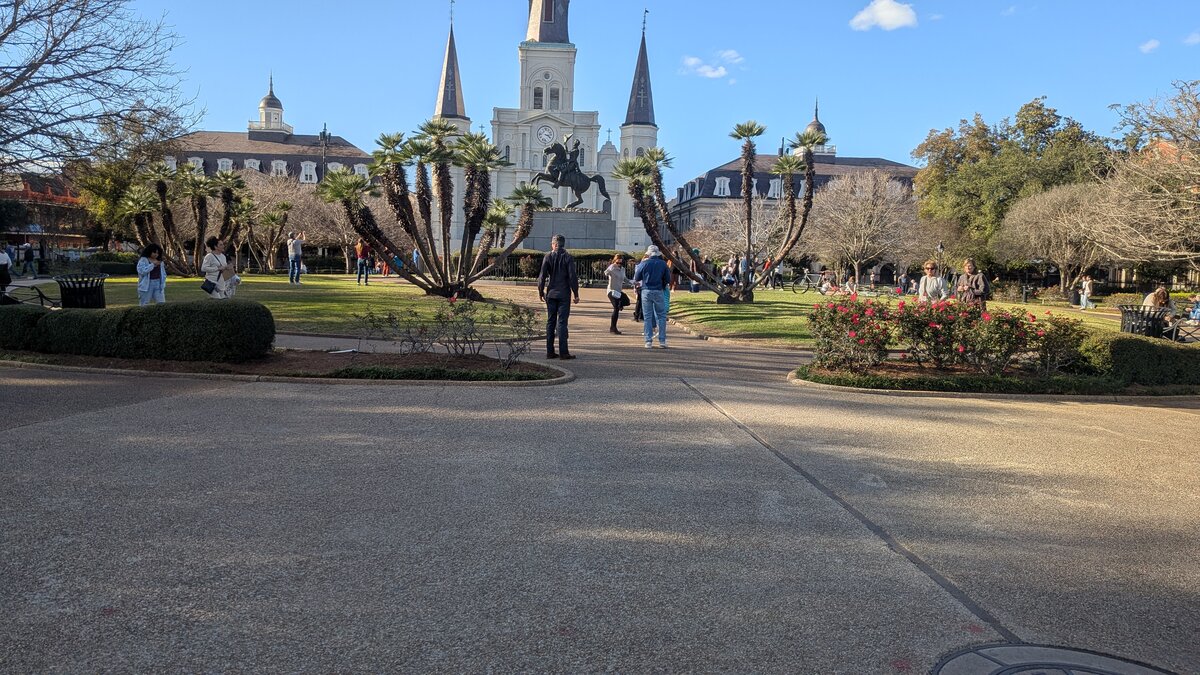
Four hours.
That’s all we had in New Orleans. Just over an hour from Bay St. Louis, so we made an afternoon of it.
Completely worth it.
Bourbon Street
First stop: Bourbon Street.
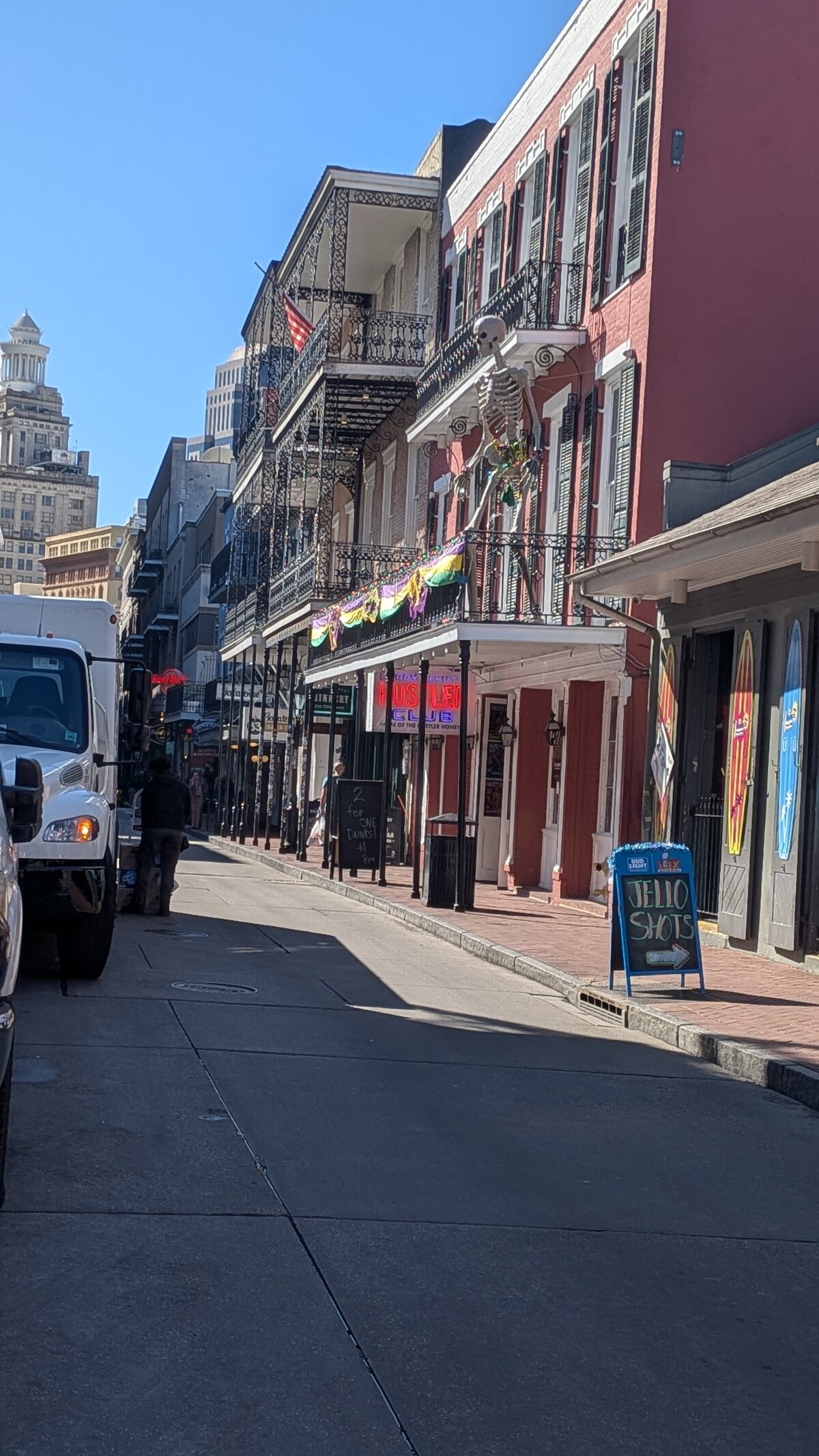
Bourbon Street.
Late morning on a weekday and it was already… Bourbon Street. Skeleton on the balcony. Mardi Gras beads draped everywhere. Jello shots advertised by the sidewalk. We walked it, took it in, and kept moving.
Creole for Lunch
From there, we found a Creole restaurant and did it right. Gumbo. Jambalaya. Red beans and rice. The whole lineup.
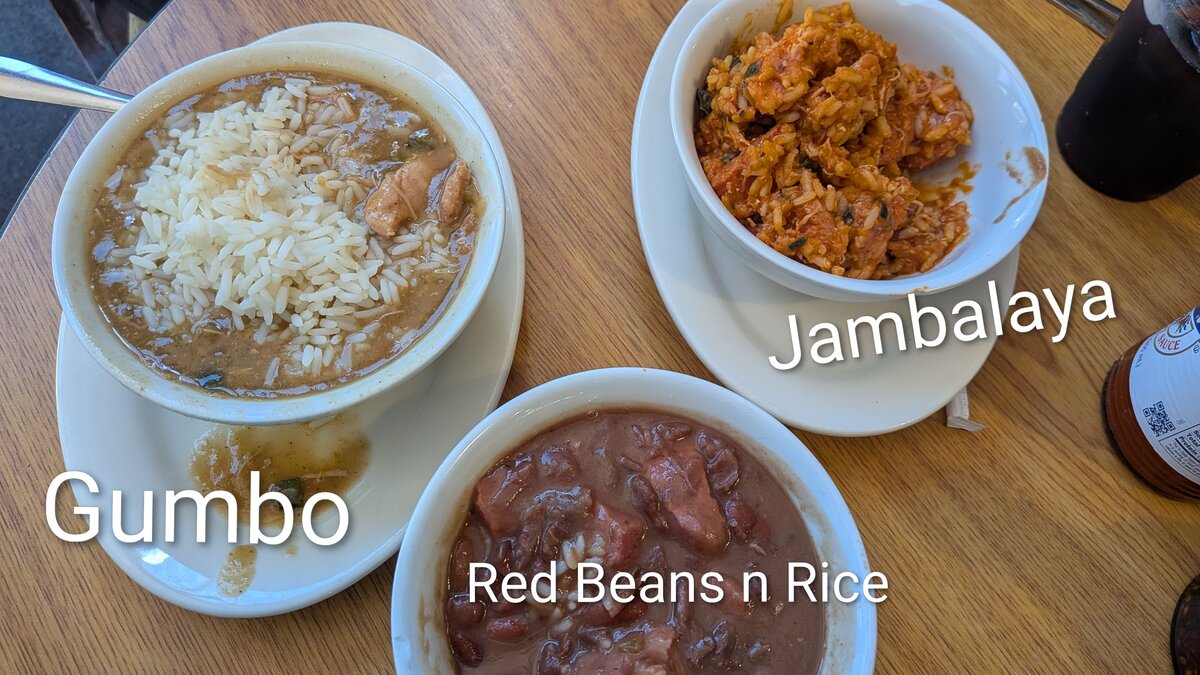
Gumbo, Jambalaya, and Red Beans n Rice, a proper New Orleans lunch.
Very good. Very New Orleans.
The Mississippi River
We made our way down to the riverfront.
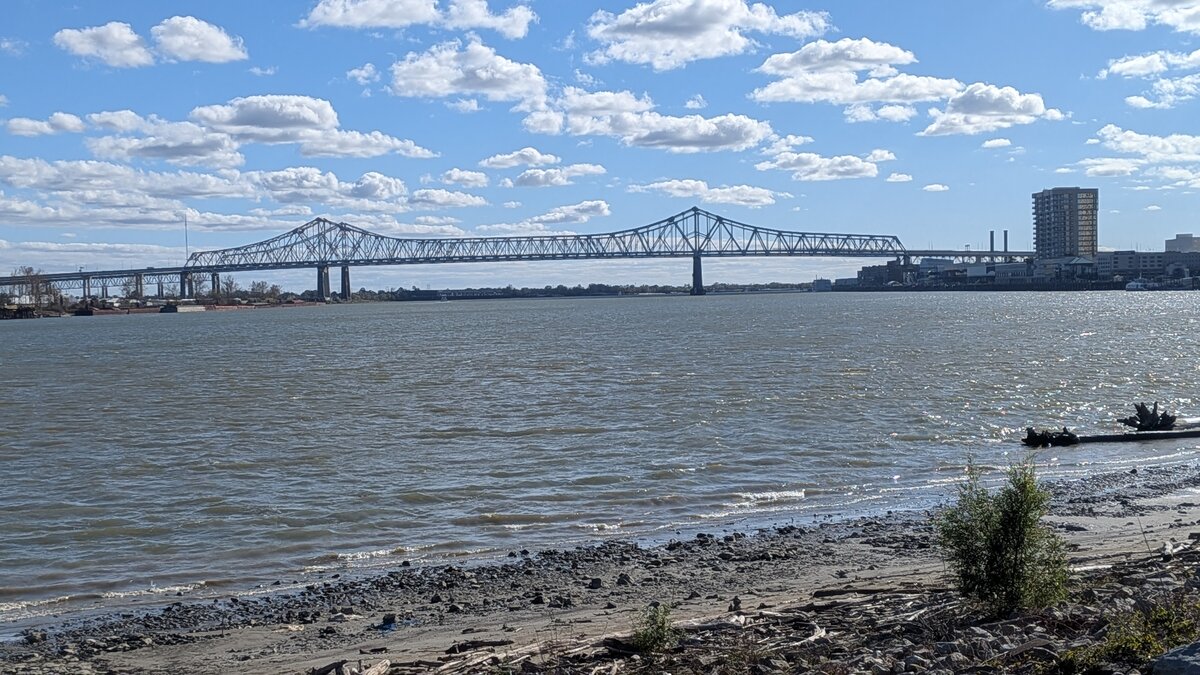
The Mississippi River at New Orleans.
The Crescent City Connection bridge stretched across in the distance — a double-span cantilever truss bridge that’s hard to miss.
Café du Monde
We couldn’t leave without stopping at Café du Monde. Right on the edge of Jackson Square, open since 1862.
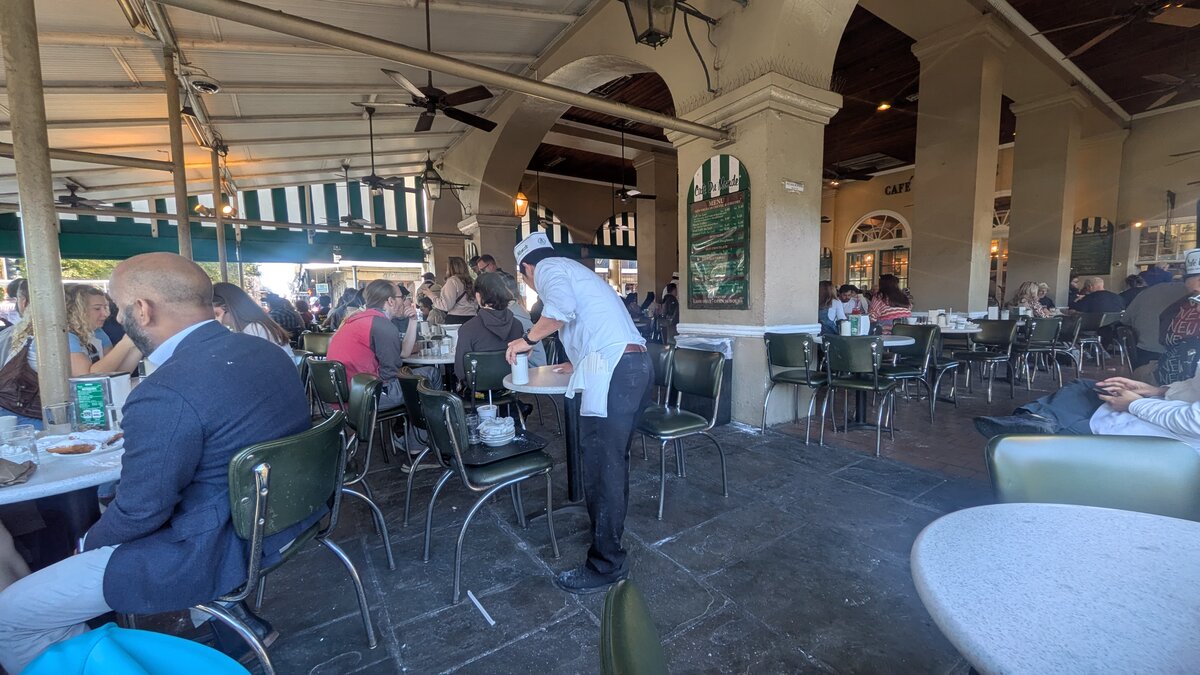
Café du Monde — packed, as always.
Beignets and café au lait. The beignets come three to an order, buried in powdered sugar. Ben looked very happy about this.
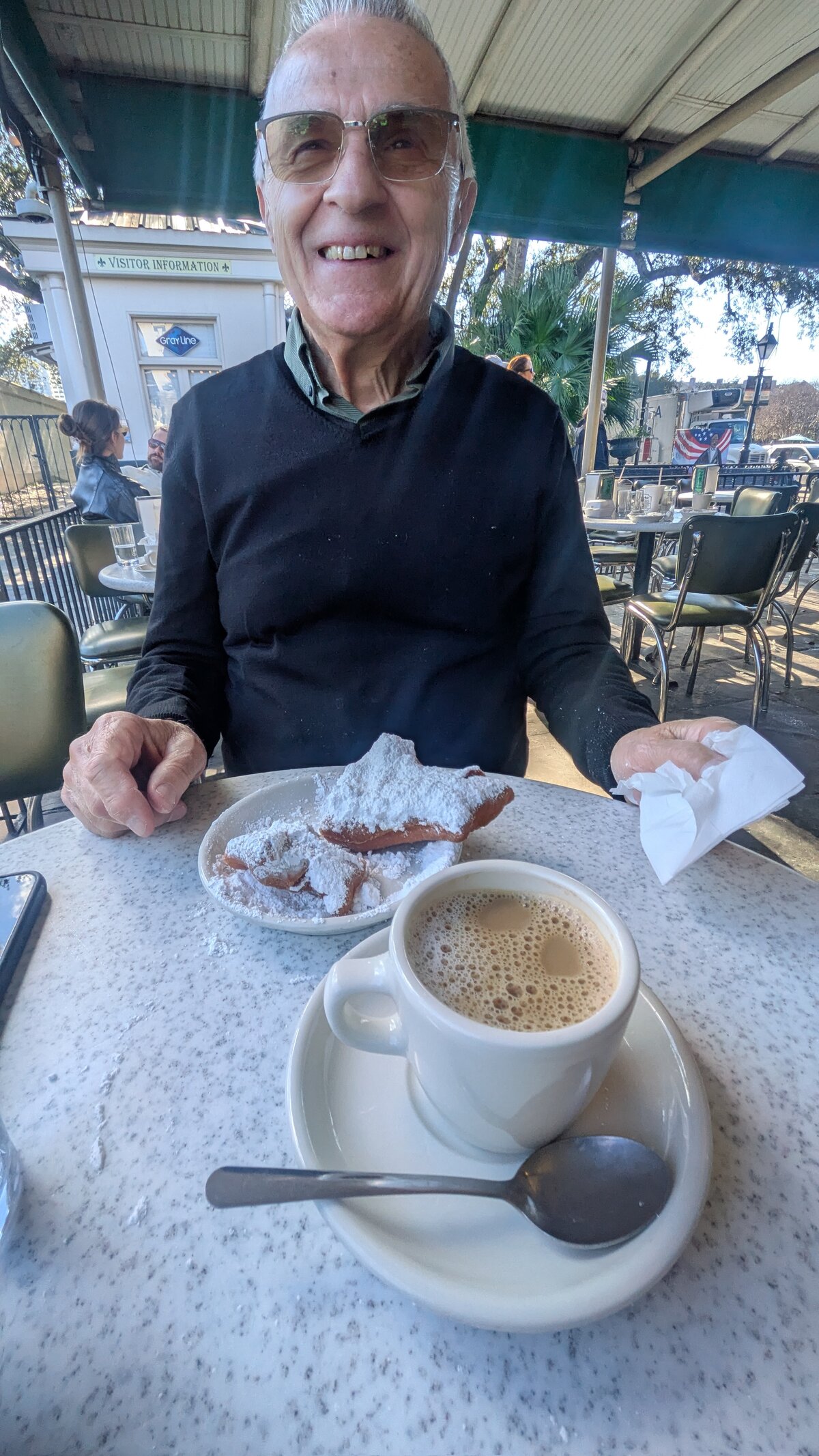
Ben with beignets and café au lait at Café du Monde.
We also caught some great street performers. Music. Magicians. Entertainers. So New Orleans.
Jackson Square
Jackson Square — the heart of the French Quarter, and one of the most recognizable public spaces in America.
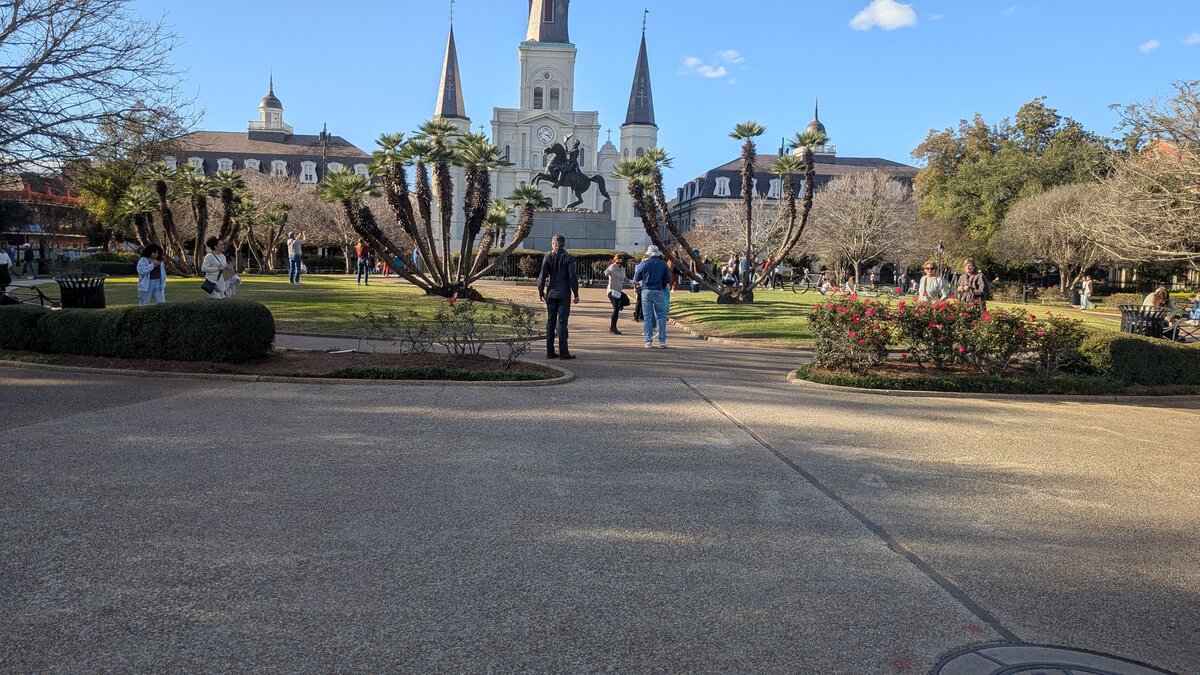
Jackson Square, with the St. Louis Cathedral rising behind the Andrew Jackson statue.
At the center stands a bronze equestrian statue of General Andrew Jackson, hat tipped, horse rearing. It was erected in 1856 and is considered one of the finest equestrian statues in the country — the horse balanced entirely on its two hind legs, which was a remarkable engineering feat for its time.
Behind it: St. Louis Cathedral.
The Cathedral of Saint Louis, King of France, is the oldest continuously active Roman Catholic cathedral in the United States. The current building dates to 1794 (rebuilt after a fire), with major renovations in 1851. Those iconic triple steeples have been watching over the French Quarter for well over two centuries. Pope John Paul II visited and held a prayer service here in 1987.
The square itself was once a military parade ground — the Place d’Armes under French and Spanish colonial rule. It was renamed Jackson Square in 1851. Today it’s ringed by artists, tarot readers, fortune tellers, and street musicians. Lively. Colorful. Very much alive.
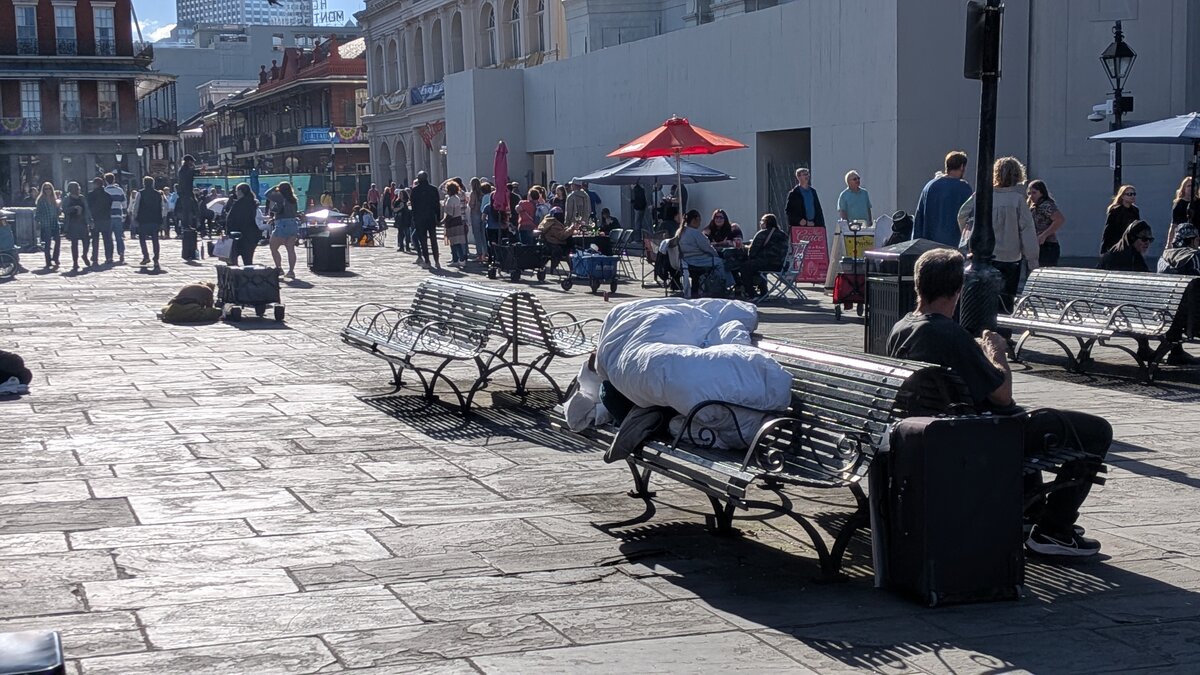
The waterfront plaza beside Jackson Square.
Just four hours. But enough for us to experience the flavor of New Orleans.